Technical Indicators
US crypto traders use real-time price alerts to catch session moves without watching charts all day. This guide covers what works in practice — including a step-by-step BTC example and how to automate it with Phalerta.
In short: a crypto price alert is a notification that fires when market price meets a condition you chose in advance. That might be a break above resistance, a reclaim of support, or a move relative to an indicator such as SMA or RSI.
For traders in the United States, the point is practical. Crypto runs 24/7, but many of the sharpest liquid moves cluster when US participants are active. Alerts let you stay close to those windows without treating chart-watching as a full-time job.
Bitcoin and major altcoins never “open,” but order flow often densifies during US hours and during the European overlap. That does not mean every US trader should spam short-interval alerts. It means urgency and threshold should match the tape you actually trade.
During active US windows, slightly tighter level alerts can make sense if your strategy depends on fast continuation or failed breakouts. Overnight, the same tight rules can create noise — thin books and wicks trigger notifications that never deserved your attention.
A useful rule of thumb: write the playbook first, then encode only the conditions that would change what you do.
Most effective US workflows cluster into a few alert types:
If you are new to the basics, start with Phalerta’s beginner guide to crypto alerts, then return here for US-session specifics.
Suppose you trade BTC and care about a session level at $64,000 going into the US day. You do not want every wick — you want a meaningful cross you will actually review.
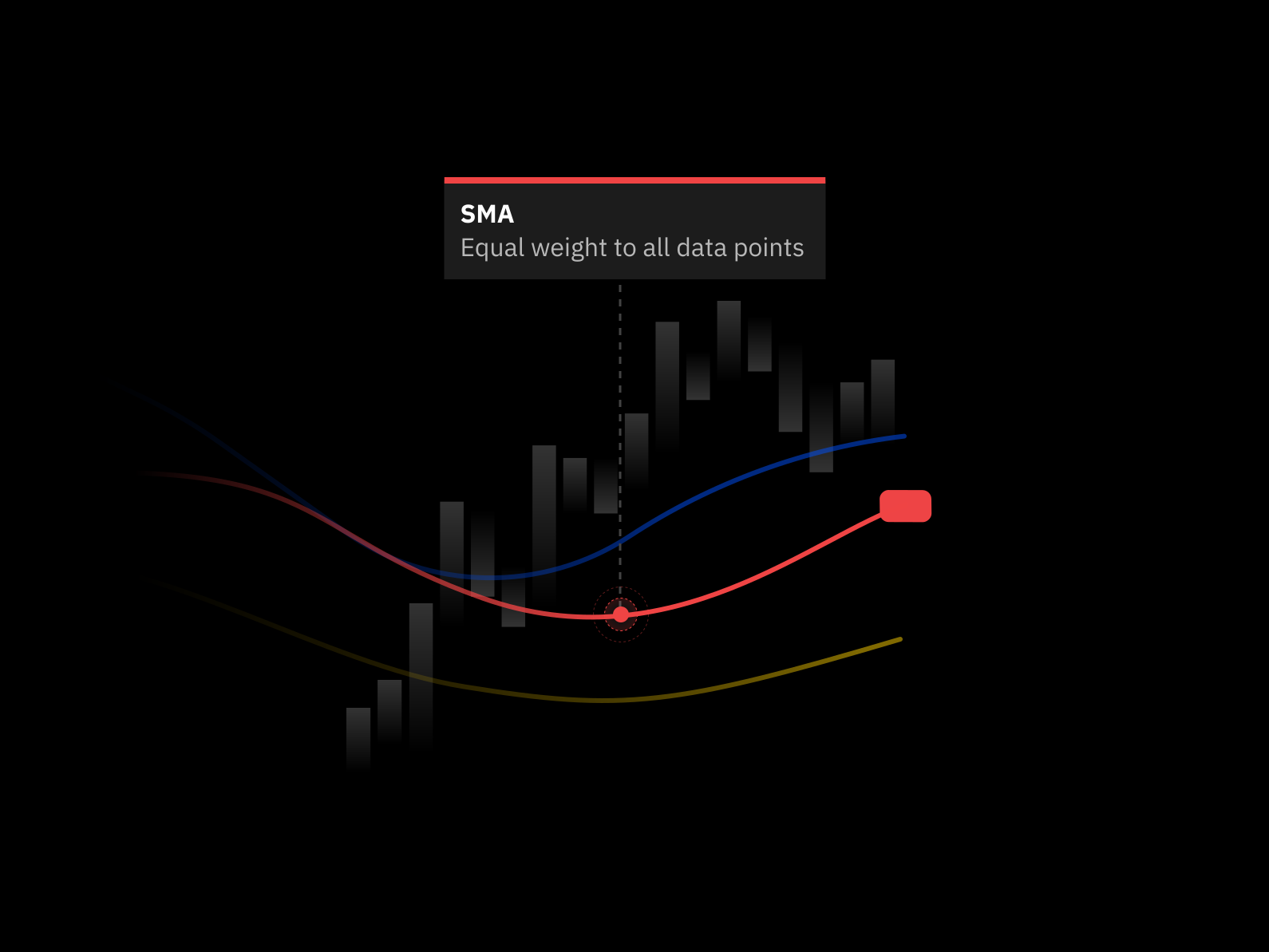
This is the same discipline behind SMA crossover examples in Phalerta’s education content: clear parameters, clear trigger, clear next step.
Price alone can be noisy. Many US day traders add context: for example, a breakout alert only matters if RSI is not already exhausted on your timeframe, or a pullback alert matters more near a rising SMA.
Phalerta is built for that kind of customization. Create indicator definitions you understand, then attach alerts so notifications reflect your rules — not a stranger’s Telegram call.
Related reading: How to Leverage RSI for Trade Alerts.
Phalerta — from Phixela — helps US crypto traders turn this workflow into software: custom indicators, configurable alerts, and multi-channel delivery through Telegram, Discord, Email, and the Phalerta app.
Explore Features and Pricing when you are ready, or open the app and create your first rule today.
Market hub: Crypto trading alerts for USA traders.


Turn insights into action. Set up custom crypto alerts in Phalerta to track key indicators and stay informed with real-time notifications across Telegram, Discord, Email, or the Phalerta app.
A notification that fires when price meets a condition you defined — such as crossing a level. Phalerta can deliver it via Telegram, Discord, Email, web, or mobile.
Many tighten rules during higher-volume US hours and the EU–US overlap, and use quieter overnight settings to reduce noise.
No. Phalerta alerts are your rules. Signal groups are typically someone else’s trade calls.
Yes. Create custom indicators in Phalerta and use them with alerts so notifications include the context you care about.
Telegram or mobile for urgent session alerts; Email for lower-priority conditions.
Start with a few high-conviction rules tied to a written playbook. Add more only when each has a clear purpose.
No tool can promise that. Alerts improve awareness; risk management and decisions remain yours.
Yes. Phalerta is an English-language product used by traders internationally, including in the United States.
Usually no. Prefer conditions that match how you confirm trades, and avoid duplicate overlapping rules.
Create a free account at app.phalerta.com, set one BTC or ETH level alert, and connect Telegram or mobile.